Cleaning
Plastic sponges and scourers → natural scrubbers
Scouring plastic against dishes wears it into fragments. Natural scrubbers compost at the end.
Swap Priority
64/100
High priority
Swap Priority 64 out of 100: High priority- Plastic avoided
- ≈ 250 g a year
- Typical cost
- £3 – £10
- Swap from
- Plastic sponges and scourers
- Last reviewed
- 26 September 2026
How strong is the evidence?
How the dials work- Exposure evidenceHow strong is the evidence that the plastic version exposes you to microplastics or plastic chemicals?
- Emerging · 2/4
- Environmental evidenceHow strong is the evidence that this swap cuts environmental harm over the product's whole life?
- Emerging · 2/4
- Claim verificationHow well has the alternative's plastic-free claim been verified?
- No product yet
Why swap
Polyurethane sponges and nylon scourers wear down against pans and plates you then eat from, and are replaced every few weeks.
What to look for
- Pure cellulose sponges without a synthetic scrub layer
- Loofah, coconut fibre or copper scourers
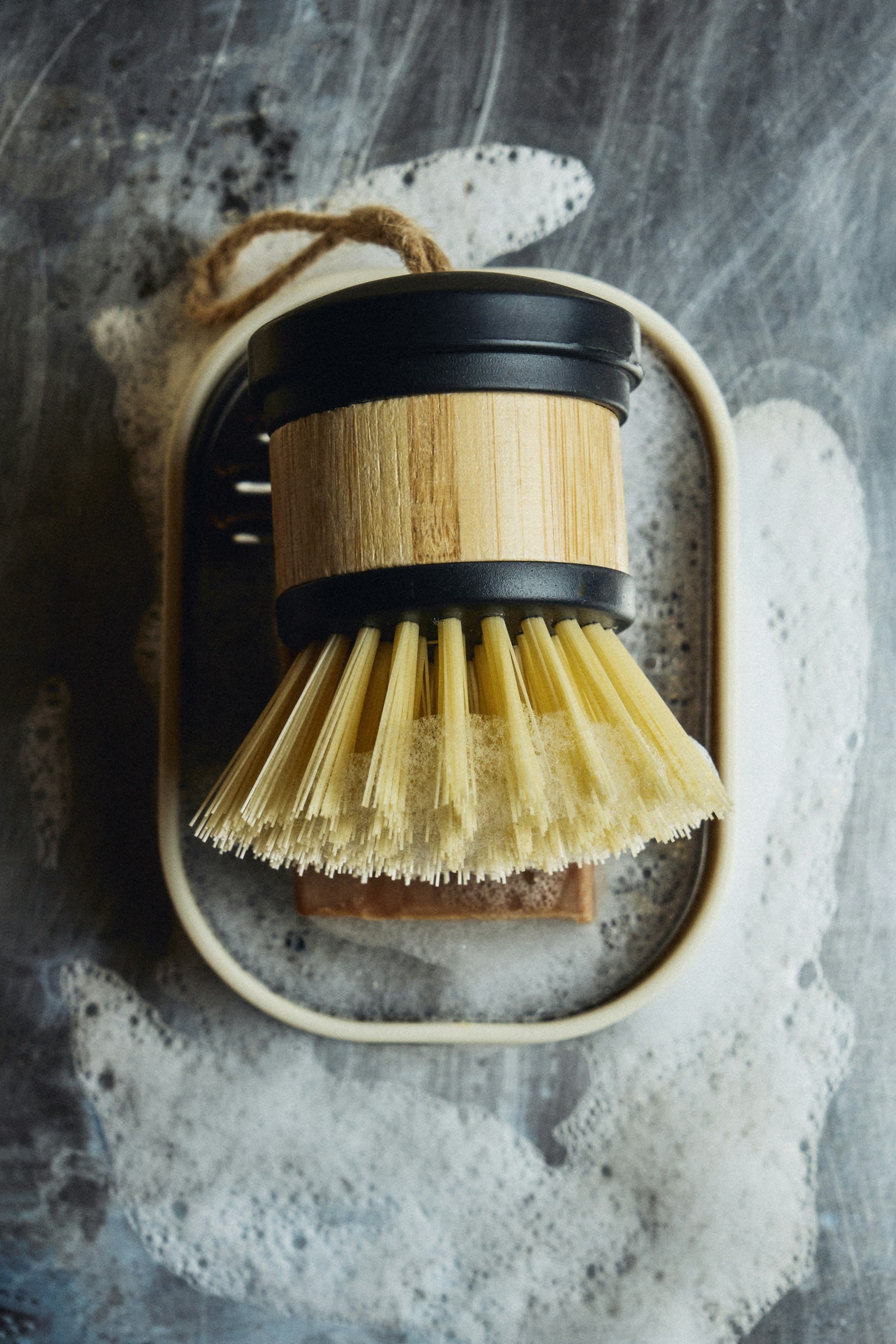
- Wooden dish brushes with plant fibre bristles
Watch out for
- Many "eco" cellulose sponges have a polyester scrub layer
- Tampico and sisal brushes are great — check the bristle glue
More swaps in cleaning
Cleaning55/100Swap Priority 55 out of 100: Worth doing
Washing-up liquid bottles → dish soap bar or refill
A dish soap bar and a wooden brush replace the bottle entirely.
Worth doing · about 400 g of plastic a year
Cleaning52/100Swap Priority 52 out of 100: Worth doing
Single-use cleaning sprays → refillable bottle and concentrate
Keep one good bottle and refill it. Concentrates cut packaging and cost.
Worth doing · about 1.0 kg of plastic a year